

Place Your Microbets
Should unilateral prop bets be banned?

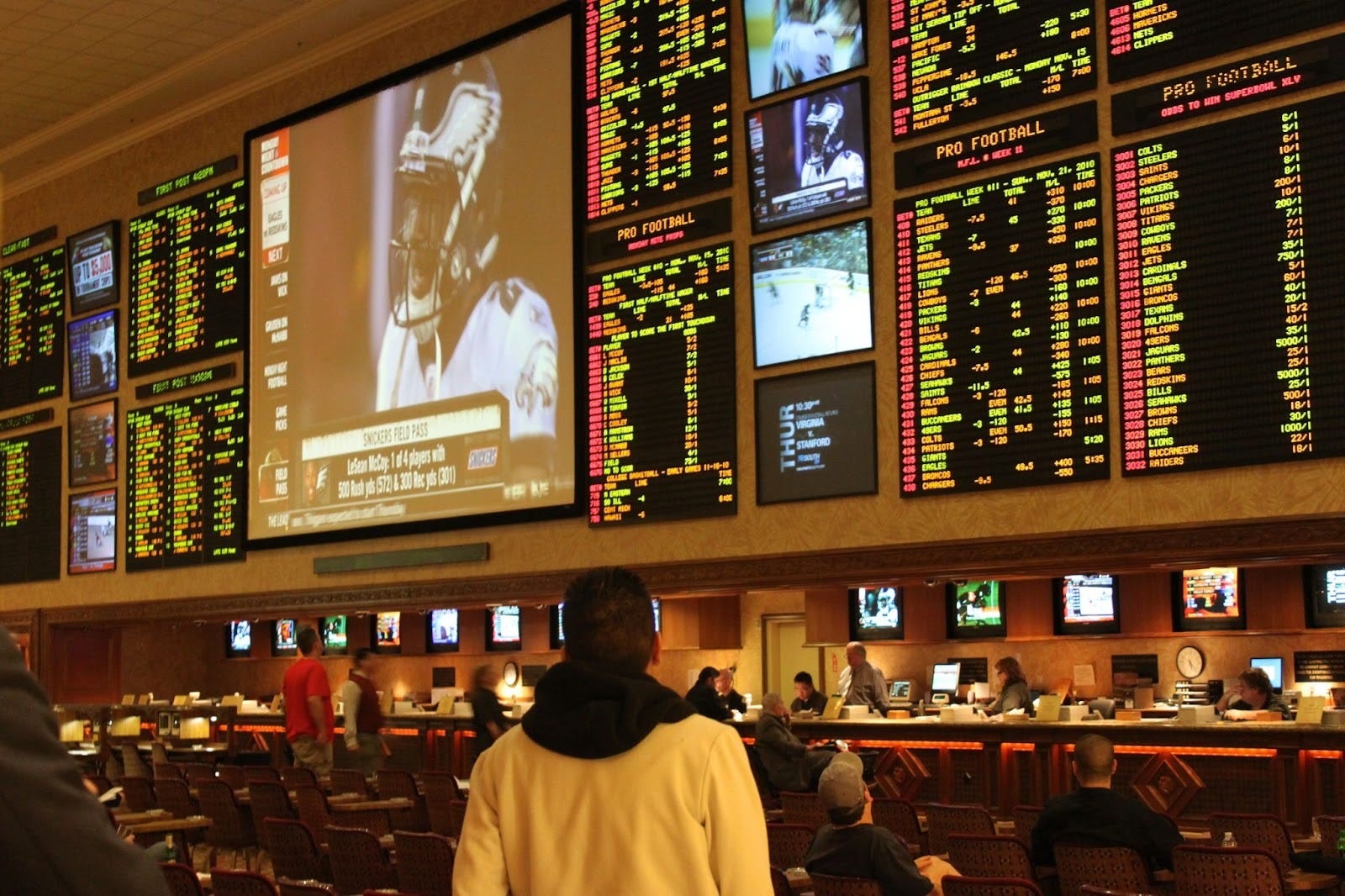
In 2021, I placed a prop bet through a Vegas sportsbook on Superbowl LV: Rob Gronkowski, I surmised, would score 2 touchdowns in the game.
I don’t recall the odds or the exact payout—a few hundred dollars at most—but I do remember the first Gronk spike. The second was even sweeter. The bet had hit: I could only laugh along with the Gronk.
Few would object—on moral grounds or otherwise—to this type of gambling. Betting on the outcome of a game is a practice as old as games themselves. And player-specific “proposition bets” aren’t new; they entered the mainstream in January 1986, when bookmakers offered 20-to-1 odds on William “The Refrigerator” Perry, a defensive tackle of all positions, to score a touchdown in Super Bowl XX. The Fridge did.
My bet was placed before kickoff, under the influence of Coors light and sheet pan nachos, but even an in-game wager at halftime would feel benign to most. It’s the same bet: a regulated, secure wager on a player’s affirmative success.
Gronk play good; Gronk score two touchdown; everyone happy.
But here’s the larger question and the subject of today’s quest: what if I could’ve bet on the outcome of a game-deciding field goal? Or a single pitch—ball or strike—in baseball? Or the over/under point total of a single basketball player?
This is the “microbet”—a wager not on a game’s outcome but on a granular, discrete event within it. And unlike my Gronk bet, many of these can be decided by the action (or inaction) of a single athlete.

In-game prop bets are a rapidly growing market: according to the New York Times, bets “during games accounted for more than half the money wagered on FanDuel and DraftKings in recent quarters.” It’s mostly young men—Gen Z and Millennials—who are drawn to the sensory rush of in-game props. “Alright, bet,” quipped Logan Lebeouf in his analysis of the trend.
On their own, in-game props aren’t breaking sports. But microbets arguably are.
Consider the recent wave of scandals shaking professional basketball and baseball. In 2024, the NBA banned Jontay Porter for life after he “disclosed confidential information” (i.e., told bettors he would “get hurt”) and intentionally altered his play (i.e., played really bad and then “got hurt”) to influence prop bet outcomes.
This past summer, Major League Baseball sidelined Cleveland Guardians pitchers Emmanuel Clase and Luis Ortiz over suspicious activity tied to bets on first pitches—cases that triggered alerts due to deliberate pitches thrown well outside the zone to start specific innings.
See for yourself:
Some of these balls are comically low and out of the zone: dirty pitches in more ways than one. Clase and Ortiz underestimated the power of analytics: league officials reviewed not only historical trends of placed bets and pitch types but even their arm angles—exactly how and where they released the ball—to determine that something was up.
Finally, just last week, an FBI bust implicated Miami Heat guard Terry Rozier in a complex game-fixing scheme. Like Porter, Rozier tipped off bettors. Many also suspect Rozier intentionally underperformed in specific games to trigger payouts on microbets and player props. Again, you be the judge.
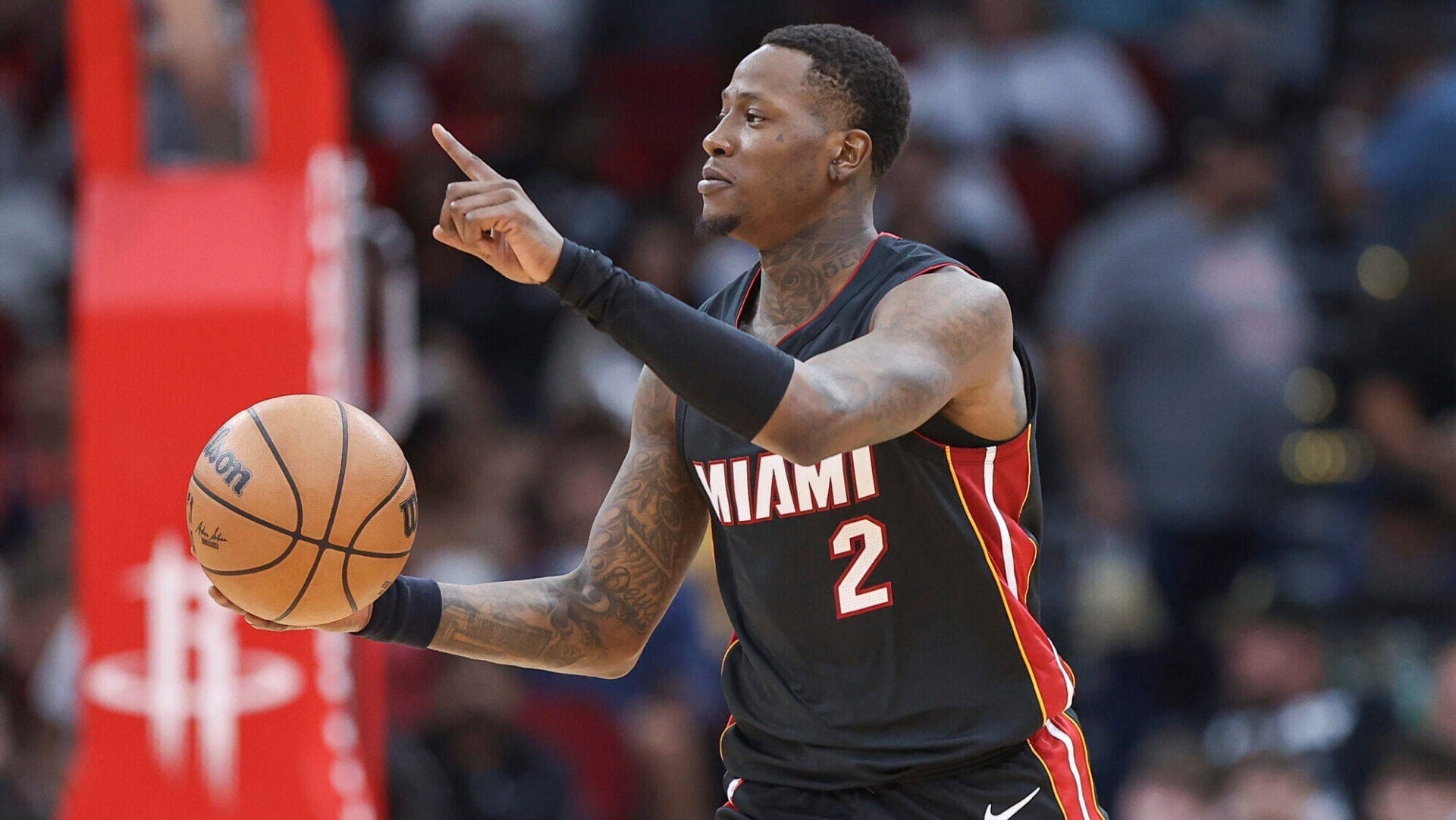
Terry Rozier
What these scandals have in common is the intentional fixing of bets whose outcome can be determined by a single player. How can something so small—a ball in the dirt, a few missed three pointers, a tweaked ankle— pose an existential threat to the integrity of the games we love?
Let’s get into it.
The Case Against Microbets
The pitfalls should be obvious: players who aren’t playing to win demean the overall product. What’s the point of watching if the games are a charade? As long as microbets exist, the temptation to rig them will exist. They’re simply too easy to manipulate.
Keith O’Brien recently covered prop bets in the Atlantic, arguing that they should be eliminated from sports. That’s probably too broad an ask and, as he acknowledges, unlikely to happen. Professional sports leagues are firmly and financially tied to the sports betting industry, both through advertising partnerships and through equity stakes in data companies that provide information to sportsbooks.
O’Brien also doesn’t distinguish between prop bets more broadly and microbets specifically, even though the latter is exactly what he’s describing here:
An individual player would have a hard time making sure their team loses the game, but can easily miss some shots on purpose to keep their points below a certain target, or pull themselves out of the game with an apparent injury, so that they never have a chance to hit that home run.
O’Brien spoke with Mike DeWine, the governor of Ohio, who wants to ban prop bets in all sports outright. Here’s O’Brien quoting DeWine:
“I think the biggest concern is how easy it is to do,” DeWine told me yesterday. “It’s one action by one person. So it can be unilateral. It doesn’t involve anybody else.” He added that athletes can rationalize fixing a prop bet more easily than they can talk themselves into throwing an entire match. “I think an athlete could justify it in their own mind by thinking, I’m not doing anything that is really going to impact the outcome of the game. All I’m doing is maybe throwing the first pitch as a ball.”
Governor DeWine gets to the heart of the problem: the sheer simplicity of the corruption. It’s easy to imagine a younger athlete on a rookie contract or a journeyman veteran—someone without enough zeroes on their salary or deep-seated loyalty to a team and its fans—stumbling their way into this “victimless crime.” A casual conversation or two, a genuine minor ailment leveraged as a plausible alibi (that ankle’s been bothering me anyway), and the fix is in.
Fixing bets also opens up players to outside threats and manipulations; they become compromised assets and targets for extortion. The recent FBI bust, with its alleged Mafia connections, underlines that threat. In the 1990s, Taiwan’s baseball league learned this the hard way: players were bullied and coerced by criminal rings into rigging games, and some were even attacked when they tried to walk away.
And all of this says nothing about what rapid fire prop-bets do to the millions of bettors click-click-clicking through slick UX platforms. Critics suggest that we’ve invited a modern casino into every American living room. In an article for the New York Times, “Gambling Is Killing Sports and Consuming America,” Joon Lee writes:
But the rising frequency of these scandals, and the public’s fading trust, points to an industry rotting from the inside — one that rewards corruption, punishes transparency and treats addiction as a business model. The same institutions that claim to protect the integrity of the game have built an economy dependent on its erosion. And the deeper the rot goes, the more it misleads fans that gambling isn’t just part of sports, but part of being American.
Lee traces the problem to 2018, when the Supreme Court struck down the federal gambling ban. Since then more than thirty states have legalized sports betting—a decision that, in Lee’s view, sent us tumbling down a slippery slope.

Major League Baseball became the first U.S. professional sports organization to invest in daily fantasy sports when it took a stake in DraftKings in April 2013
Lee points to a broader cultural failure in which, as he suggests, nothing really matters because everything is a quantified bet. A team winning or losing becomes secondary to a bettor’s individual scorecard. We have effectively democratized speculation and selfishness.
Now for some, this is little more than old fashioned moralizing, and prohibition isn’t a serious solution. Let a million microbets bloom, and keep the fleeting attention of the Tik-Tok, 6-7 generation.
The Case for Microbets
The case for allowing microbets begins with a simple counter-argument: the system worked.
Jontay Porter wasn’t caught by a federal agent in a sting operation but by the sportsbooks themselves and monitoring organizations reporting irregularities to the NBA. When Porter’s co-conspirator placed an $80,000 prop bet, the unusual betting activity was immediately flagged. The bet was frozen and never paid out.
In his statement banning Porter, NBA Commissioner Adam Silver summed up the issue:
While legal sports betting creates transparency that helps identify suspicious or abnormal activity, this matter also raises important issues about the sufficiency of the regulatory framework currently in place, including the types of bets offered on our games and players.
Proponents of microbetting seize on that first clause. Transparency is the whole point. In the old, illegal-bookie era, Porter’s fix would have worked, the money would have been paid, and fans would never have known. Driving this market underground wouldn’t end prop bets or microbets, but it would end the oversight.
Christian Schneider, writing at the National Review (“No, Gambling Isn’t Ruining Sports”), captures this perspective: “From fantasy football leagues to bingo nights at VFW halls, the American love of gambling will always be stronger than those nagging us to criminalize it. And the only reason it appears there is now more corruption is because we have ways of identifying it.”
In other words, Americans are gonna gamble. So pick your poison: shady black markets or glossy corporate ones.
According to this view, banning bets on free throws has little to do with protecting the game’s integrity. Instead, it’s a moralizing, “save the kids” restriction that’ll only drive sports betting revenue underground or off-shore.
The second argument is that rapid fire in-game engagement isn’t a bug but a feature. For years, professional leagues were concerned about declining viewership and aging demographics. Sports gambling, especially fast-paced betting, elevates the viewing experience. It’s fun.
Why else would I care about a regular season baseball or basketball game when there are 162 and 82 of them respectively?
There are simply too many other ways to be entertained in this world. Sports betting gives the games juice, and in-game props are the sweetest nectar of all. After all, we’re catching the few bad actors who try to cheat the system. So what’s the problem?

My personal view is that the reality of microbetting is both better and worse than either side acknowledges.
Professional athletes are overwhelmingly incentivized to play well, and the risk of systemic game-fixing is low. As the Jontay Porter case proved, the oversight mechanisms in the legal markets are working. The majority of bettors aren’t addicts but bored dudes throwing a few bucks on whatever game’s on while they drink flat beer at a Buffalo Wild Wings. Not the prettiest picture, granted, but they should probably be allowed to do that.

A Buffalo Wild Wings
…unless perhaps the leagues’ one big fear is justified. It only takes one big, public fix to undermine everything: an intentionally poor performance by a marquee player in a playoff game, an “intentional unintentional” walk in a World Series, or a missed field goal by a crooked kicker in a Superbowl. That’s a potential doomsday event for pro sports.
The league commissioners themselves seem to be looking for a middle ground. Here’s O’Brien writing in The Atlantic:
The leagues are aware that prop bets are a problem. Just this week, two days before the news of the FBI arrests broke, NBA commissioner Adam Silver said on The Pat McAfee Show that the NBA had asked gambling platforms to “pull back some of the prop bets.” At the MLB All-Star Game this summer, commissioner Rob Manfred signaled that he, too, had concerns about props. “There are certain types of bets that strike me as unnecessary and particularly vulnerable,” Manfred told reporters, questioning the value of letting fans bet on things like balls and strikes. “Do we really need that last kind of bet?” Manfred asked.
This points to a potential middle path. We could live in a world that bans betting on individual balls and strikes without banning a bet on Shohei Ohtani hitting a home run. It’s a nuanced regulation but potentially a necessary one.
Then again—to play devil’s advocate once more—maybe even the surgical approach is an overreaction. Any bet that’s pushed back into the shadows, even a bet on balls and strikes, is a win for illegal bookies. Instead: allow it all, let the money flow where it will (legally), and trust the system to catch bad actors.
I think the bottom line is this: if you believe that microbets (and in-game props more broadly) represent some form of moral cratering, a creeping crack in the hull of American sports, a rumbling portent that the majority of fans care less about the meaning of the games and more about how an ad-suggested prop bet might boost their own checking account, then I might just agree with you. But does that mean microbets should be banned?
It’s time for you to decide.
Path A: Allow Microbets
Do we continue down the path of innovation in sports gambling, allowing ever-more-granular wagers?
Path B: Ban Microbets
Or, as with last week’s discussion of gene enhancement in sports, do we stop this innovation in its tracks? Should we ban microbets—that is, the specific, unilateral prop bets that can be fixed by a single player—and protect our sports traditions?
Please vote below!
Check in next week to reveal the winning path. As always, thanks for reading!
I'm willing to bet that in five years, prop bets will remain in place.
I'm also willing to bet that in five years, microbets will move out of standard sportsbooks and into predictive betting markets.
I had no opinion about this before but just from this article I think microbets should be banned.
Driving microbets into the shadows will reduce the number of people doing it and the impact on sports and athletes.
The masses will do what’s easy and available, they’re not going to find a bookie anymore imo.
My dad always says that locks keep honest people honest, and I think it’s a good thing that athletes are not tempted to get pulled into the tractor beam of corruption.