

Keep Kids Off E-Bikes
Slowing down a runaway trend

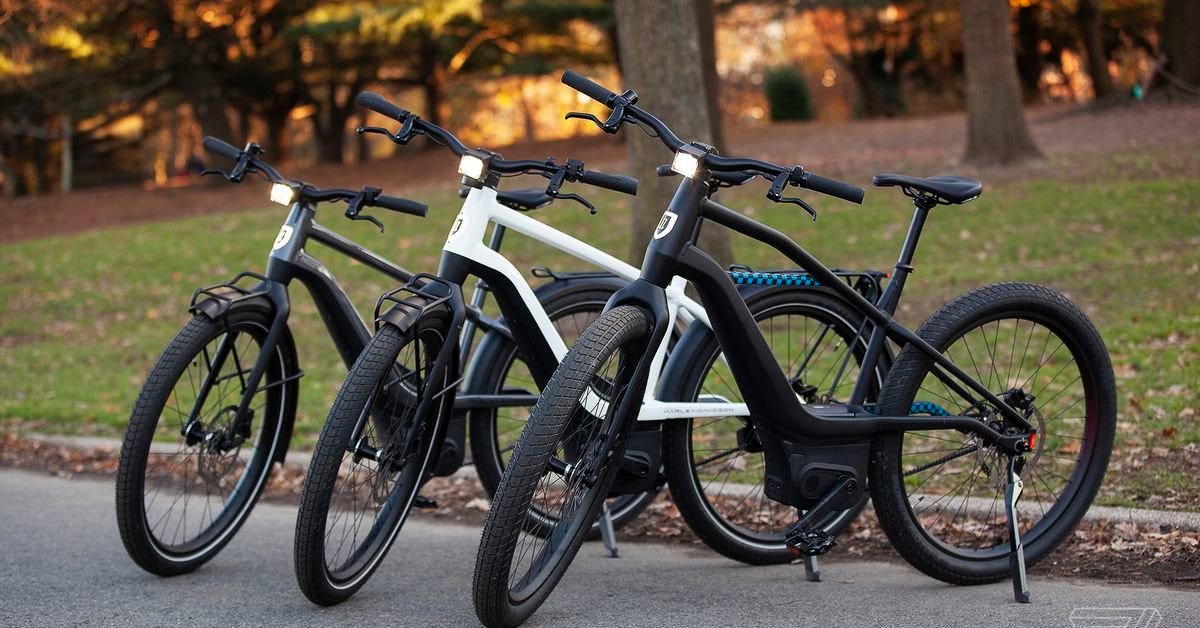
Let me preface by saying that I take no pleasure in finger-wagging, in being the neighborhood fun police, in scolding the otherwise wonderful and perfectly intelligent children (many of whom whose parents I know) that race through the STOP sign at the end of my street.
But, alas, this is my “old man yells at cloud” moment.
Kids on e-bikes are a scourge, and they must be stopped.

This is me
I live in South Carolina, where e-bikes are practically unregulated. For the most part, they’re treated just like regular bikes: no license or registration required. Anyone can ride Class 1 or 2 e-bikes (up to 20 mph), while Class 3 e-bikes (up to 28 mph) are—in theory if not practice—reserved for those 16 and older.
Well-meaning parents purchase these motorized contraptions for their kids —“assisted cycling” for young legs—and I’d like to believe, at the very least, they send their children out the garage door with a few cautionary instructions.
“Wear a helmet.”
“Stay out of traffic.”
“Don’t go too fast.”
But kids will be kids.
A month ago I had to slam on my brakes in the middle of our 25mph main street as a pack of helmetless 12 year-olds, two to a “bike,” zoomed behind, beside, and just a few feet in front of my SUV. One boy slid sideways and nearly collided with his friend.
I rolled down my window and said (nicely, I promise) — “Y’all need to be careful.” I was met with blank stares and a single, sarcasm-tinged “Okay.”
Did I just get okay boomered?
I’m only 35, kid! I play videogames and crush Airheads. I’m just like you!
I drove off, slowly, and resolved that I would never—not in a million years—allow my kids free rein on an e-bike.
Cycling advocates will bristle at this reaction. Many claim that e-bikes are safe, eco-friendly, and closer to bicycles than motorcycles. People for Bikes has shaped regulation on this issue, arguing that “low-speed electric bicycles [...] closely resemble traditional bicycles in their equipment, handling characteristics, size, and speed.”
But is that actually true?
The research on e-bike accidents tells a different story: e-biked related trauma more closely resembles that of motorcycle accidents. Shattered kneecaps, multiple broken limbs, severe head injuries. For years, ER doctors have espoused the dangers of motorcycles—“donorcycles”—and now they’re sounding the alarm on e-bikes.
Here’s the truth: kids under 16 shouldn’t be on e-bikes of any kind. Period.
If that sounds extreme, please read on—I hope you’ll join me in this week’s quest to leave e-bikes to riders of appropriate age!
What is an E-Bike?
On its face, it's simple: an e-bike is a bicycle with a battery-powered motor.
The reality is much murkier.
Neither bike nor motorcycle nor moped nor scooter, an e-bike is a new creation all its own. As Ian Bogost writes at The Atlantic, “At every moment, the e-bike reminds you that it’s not quite a bicycle, nor yet a motorbike.”
“Something is ontologically off with e-bikes,” Bogost writes, “which time and adoption alone can’t resolve. Whether as bicycles haunted by motorbikes or as mopeds reined in by bikes, e-bikes represent not the fusion of two modes of transit, but a conflict between them.”
These locomotory chameleons come in three varieties:
Class 1: Pedal-assist only, with the motor providing help up to 20 mph. There’s no throttle; you have to pedal to engage the motor.
Class 2: Throttle-assisted, allowing the rider to propel the bike up to 20 mph without pedaling.
Class 3: May or may not have a throttle, but with a higher speed limit of 28 mph. These are intended for more experienced riders.
E-bikes as we know them took shape in the 1990s, when inventors in Switzerland, Japan, and the US created the first pedal-assist models—machines that gave riders a boost only when they pedaled.
The real breakthrough came when manufacturers combined affordable, high-energy lithium-ion batteries with powerful yet compact motors and smart electronics to control it all. This transformed e-bikes from clunky curiosities into nimble best-sellers.
Today, throttle or no, e-bikes come with a certain knowledge:
I can go fast.
Now, I understand that 20 mph might not sound that fast. But when you’re twelve years old and the wind is in your face and the car ahead of you comes to a sudden stop and you’ve literally never had to slam on your brakes in a high-speed situation before—it’s freaking fast.
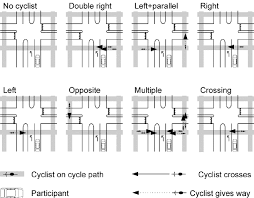
Cycling scenarios. Good luck, Timmy.
Other times, though, e-bikes aren’t fast enough!
Maybe you’re trying to keep up with older kids. And maybe you attempt to overtake a slow-moving car or beat a light at an intersection. You hit top speed (20 or 28 mph—I’ve seen plenty of kids on Class 3 bikes), and then you’re maxed out. If the road situation changes—perhaps the car you’re passing drifts left—you’ve got no more acceleration to give. You’re moving too fast to react and too slow to escape.
This is the heart of the problem.
It looks like a bike. It feels like a bike. But it doesn’t always go like a bike. It goes like an “e-bike,” which is beginning to seem like a problematic name.
There’s a semantic trap at work here. In our minds, “e-bike” refers to “fast bicycle”—a human-powered, leisurely, pastoral thing—instead of “slow motorcycle.”
It sounds quaint, safe, child-friendly.
Jack and Jill e-biked up the hill, to fetch a pail of water
We know what happens next…
The Dangers of E-Bikes
Two of the most powerful pieces of journalism I’ve ever read reveal the gruesome reality of what ER doctors see in hospitals; they are grim, difficult reads:
Fatal Distractions: Forgetting a Child in the Backseat of a Car Is a Horrifying Mistake. Is It a Crime? by Gene Weingarten
What Bullets Do to Bodies by Jason Fagone
In grisly detail, Weingarten and Fagone describe the physical after-effects of preventable tragedies.
I won’t walk you through the anatomy of e-bike injuries here. But I will tell you that ER doctors are describing injuries they used to only see in adult motorcycle crashes—now in children. Skull fractures, compound leg breaks, and multi-system trauma: terrible, life-changing injuries. Even deaths.
E-bike accidents are 1.3 times more likely to result in hospitalization than pedal bike accidents, and the injuries they cause are generally more severe. From 2017 to 2022, e-bike and powered scooter injuries soared by 293%, according to national data. Even worse, children under 18 account for about 40% of all e-bike-related injuries, with head trauma being the most common culprit, making up 60% of hospital visits.
Parents are letting middle-schoolers mount lightweight, battery-powered machines capable of 28 mph—on sidewalks, in traffic, often with passengers, only sometimes with helmets. That’s absurd in its own right, but the dangers only compound from there. Consider a few things:
Motorcyclists (the smart ones, anyway) wear protective gear from head to toe; sixth graders on their way to school do not.
E-bikes are zippy and quiet; they can be difficult for drivers (who typically aren’t looking for them) to see and hear.
The added weight of e-bikes makes them tougher to handle—and more hazardous when things go wrong.
Perhaps most importantly: we would never allow children to navigate roads by car or motorcycle; they lack the control, the judgement, and the spatial-motor capability to do so; why should e-bikes be any different?
The bottom line is this: e-bikes aren’t bicycles. They’re something else—and they require a different approach.
So what should be done?
Okay I’ve yelled at the cloud long enough. It’s time to consider a path forward.
At present, e-bike regulation in the United States is a confusing and inconsistent patchwork. Some states require helmets for minors; others don’t. Some limit Class 3 e-bikes to riders over a certain age, but enforcement is rare. In some areas, throttle-powered Class 2 bikes are allowed on bike paths, while in others they’re prohibited. A few states classify e-bikes more like mopeds, but most treat them like glorified bicycles.
It’s bad public policy all around. Parents don’t know the rules and underestimate the dangers. Police rarely enforce the laws. In the meantime, kids continue to get hurt.
In a perfect world, we would have straightforward federal regulations that establish a national baseline for safety. But the reality is more complicated. Because e-bikes are currently categorized as consumer products rather than motor vehicles, the federal government has limited authority to regulate their use on public roads. That means meaningful reform is more likely to happen at the local level.
This is where you come in.
Here’s Quest 27:
Keep Kids Off E-Bikes
Key Details:
Write your mayor and town council members: advocate for age limits on e-bikes and stronger enforcement of rules. This issue is currently being debated in our local town hall, where I hope to contribute to the conversation.
Talk to your neighbors; don’t yell at kids: okay, this one’s mostly for me. I struggle to bite my tongue when I see unsafe, careless behavior that endangers others, but road-raging rarely helps. The better long-term path is consensus building and community regulation.
Don’t buy your kid an e-bike: hopefully I’ve convinced you on this point by now, but they’re truly not worth the risk. What’s the upside? A funner, faster ride? If you’re sixteen or older, great. Otherwise, why expose a child to what data shows are increasingly dangerous situations?
Finally, bike lanes are a wonderful thing. So are trails. You can shape the future of what your town looks like—safer streets, more green spaces, and communities built for everyone.
Conversations are happening in YOUR town right now. Join them.
If you do—or already have—log your quest below and share your story in the comments! I'd love to hear how you're getting involved.
As always, thanks for reading!
Type 2 & 3 e-bikes are speed-limited electric motorcycles. They come with all the exhilaration and all the risks.
I'm an avid motorcycle rider. Been at it for over 50 years. I never saddle up without head-to-toe protective gear. It's just not worth the risk to life and limb not to.
Going down at 20 or 28 MPH will likely cause injury, potentially serious or life-threatening.
Here's an excellent test for anyone who rides an e-bike/speed-limited electric motorcycle without a helmet.
1. Sit on the bike
2. Shut it off
3. Put the kickstand up
4. Put both hands on the handlebars and both feet on the pegs or pedals, and DON'T MOVE THEM.
5. Allow gravity to do its thing.
When your head collides with the pavement, remember that's a fall at 0 MPH.
Now imagine how forward momentum might turn the pain you feel in your head into a way more serious situation when your skin (any of it) makes contact with the ground at speed.
This would hit even if it was written by a rando but reading it from a parent friend in your own neighborhood hits wayyyy better 🤌🏻🤌🏻🤌🏻🤌🏻🤌🏻